 Memory Rolls
Photo Booth Alternative: 7 Ways to Capture Your Event
Skip the photo booth rental? Compare seven alternatives on cost, effort and photo quality, from Polaroid stations to a QR-code camera on guests' phones.
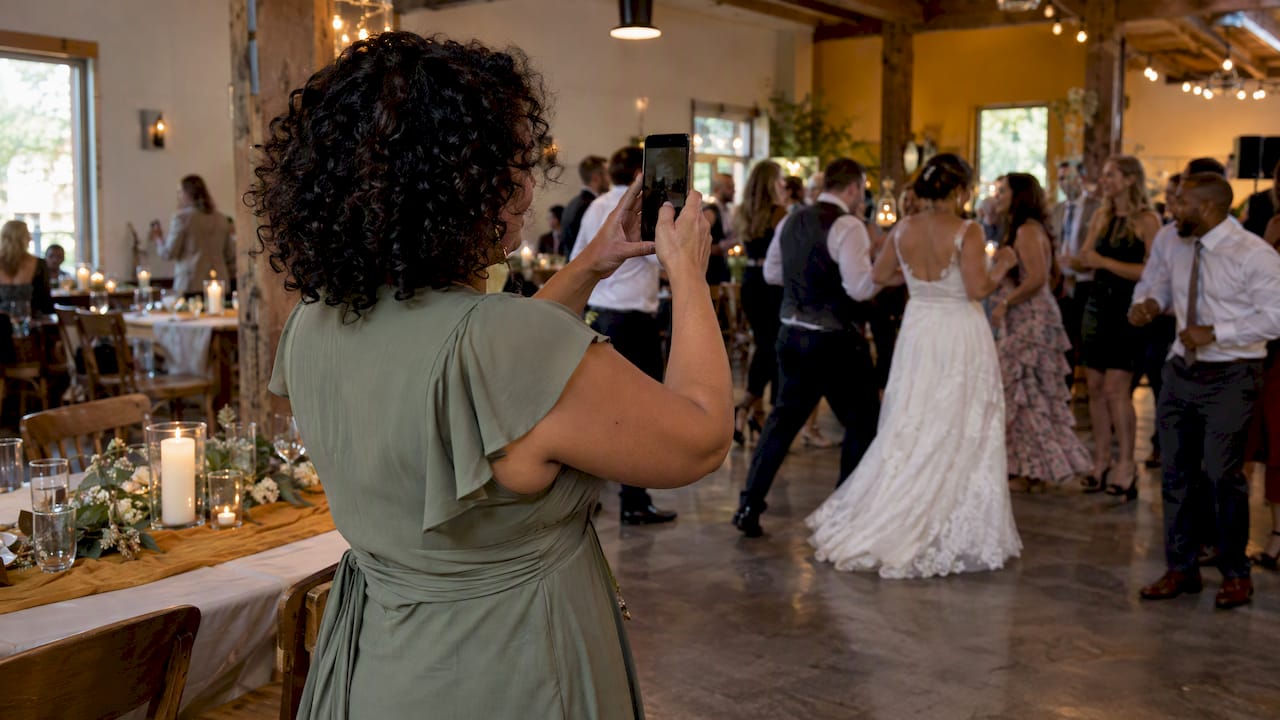
The best photo booth alternative depends on what you wanted the booth for. If you wanted props and prints, a DIY instant-film station is the closest match. If you wanted candid photos from the whole room, a QR-code camera that lives on guests' phones does the job for a fraction of the cost and with no hardware to manage. If you wanted a show-stopping attraction, a roaming photographer or a video station fits better.
Below, we compare seven options on cost, effort for you, effort for guests, and what you actually get at the end of the night. We make one of these options, so we say where it fits and where it doesn't.
TL;DR
- Traditional booth rentals are a big line item. Industry guides put a standard multi-hour package well into the hundreds of dollars, and 360 spinners cost more. Most alternatives cost far less.
- A DIY Polaroid or instant-film station gives guests a physical keepsake, but film, cameras and a person to keep it running add up.
- A QR-code camera gives every guest a limited number of shots from their own phone, with no app and no account, and you curate the shared album afterward.
- Pick by outcome: keepsake prints, entertainment, or candid coverage of the whole room. Many hosts combine two.
- Our event camera is free for the first five guests, then priced per seat, one time, with no subscription.
Table of Contents
- Why people look for a booth alternative
- Seven alternatives, compared
- What each option does well, honestly
- How the costs compare
- Perspective: why we built a camera instead of a booth
- When the QR-code camera is the right call
- Try it before you commit
- How to choose in five minutes
- FAQ
- Sources
Why people look for a booth alternative
Photo booths are popular for good reasons. They are interactive, and guests leave with something in hand. The complaints are just as consistent.
Cost. Booth pricing varies a lot by region and package. Pricing guides we reviewed put a standard rental for a few hours in the high hundreds to low thousands of dollars, and spinning 360 platforms higher still. Check local quotes before you assume a number, because add-ons like prints, backdrops and attendants change the total.
Space. A booth needs a footprint, power and a spot where the line won't block the bar or the dance floor.
The line. One booth serves one group at a time. At a 150-person reception, many guests never reach it, and the ones who do cluster at cocktail hour.
The pictures. Booth photos are posed, in one spot, against one backdrop. They are fun, but they don't tell you what happened at table nine during the toasts.
So the real question is what you need: entertainment, keepsakes, or a record of the event. Each has a different best answer.
Seven alternatives, compared
| Alternative | Best for | Cost pattern | Effort for you |
|---|---|---|---|
| DIY selfie station | Tight budgets, casual parties | Low: backdrop, props, a phone or camera on a stand | Low, but photos stay on one device |
| Instant-film (Polaroid-style) station | Physical keepsakes, guest book | Cameras plus film per print | Medium: someone has to supervise |
| Roaming instant-film photographer | Hands-off keepsakes | Hundreds to a few thousand dollars | Low |
| Video message station | Toasts, wishes | Tablet or camera rental, or DIY | Medium |
| GIF or 360 station | Entertainment, social posts | Rental, usually high | Low, but needs space and power |
| Table disposable cameras | Nostalgia | Cameras plus developing | Medium: collecting and developing |
| QR-code camera on guests' phones | Candid, whole-room coverage | Per-seat or flat fee | Low: print one sign |
1. A DIY selfie station
A backdrop, a ring light, a props basket and a phone on a tripod. It costs very little and takes an hour to set up. The trade-off is that photos stay on one device, so you still need a way to get them to guests. Without one, they are lost in a camera roll nobody checks.
2. An instant-film station
This is the most common substitute for a booth because it produces a print guests can hold. It also pairs with a guest book: each guest tapes in a photo and writes a note.

The costs are real, though. The Knot's planning guidance says to buy enough film to cover each adult guest twice, because people misuse the camera and need a second try. Film runs roughly $0.60 to $1.00 per print according to the same source, so a 100-guest wedding can quietly pass the cost of the cameras themselves.
Then there is the hidden labor. Someone has to show guests how it works and clear film jams or swap batteries. If nobody owns the table, it stalls by the second hour. Use this option when the keepsake matters more than the volume of photos, and when you have a friend or family member who is happy to run it.
3. A roaming instant-film photographer
A professional circulates through cocktail hour and the reception, shooting instant prints for guests. It removes the supervision problem. It also costs substantially more than DIY: The Knot's research cites a range of $625 to $2,895 for professional roaming instant photographers. It's a good fit if the budget allows and you want a polished, human touch. It covers only the moments the photographer happens to be near.
4. A video message station
A tablet on a stand or a camera in a quiet corner where guests record a short message for the couple or the team. It captures voices you won't get in photos. It works best as an addition, since few guests will use it during a loud party, and watching a hundred clips takes a while.
5. GIF and 360 stations
These are the high-energy, social-media-friendly cousins of the booth. They are still hardware rentals with an attendant, a footprint and a queue. If entertainment is the point, they deliver. If you are leaving the booth for budget or space reasons, they bring the same problems back.
6. Disposable cameras on tables
The classic. Guests like the nostalgia, and the pictures often have a charm no phone filter copies. The downsides are practical: cameras get left behind or taken home, nobody sees the photos until they are developed weeks later, and a roll of 27 shots disappears fast with a few enthusiastic guests. We compared this approach with the phone-based version in disposable cameras for wedding tables vs a camera on guests' phones.
7. A QR-code camera on guests' phones
Guests scan a code, and a camera opens in their phone browser. Each guest gets a limited number of shots, like a disposable camera, and everything lands in one private album. It requires no app download and no account, which matters more than it sounds: every extra step in front of a guest cuts participation.
This is the option that most directly answers the weakness of a booth. It isn't one spot with one line. The "booth" is every table, the dance floor and the parking lot send-off at once.
What each option does well, honestly
No single option wins on every measure, so here is how we would weigh them.
If you want guests to leave with something physical: an instant-film station or a roaming photographer. A phone-based camera gives you a digital album, and you can print from it afterward, but nobody walks out holding a print.
If you want entertainment as an attraction: a GIF or 360 station, or a live act. A camera on phones is a way to capture the evening, not a centerpiece.
If you want to see the event from many angles: the QR-code camera, or table cameras if you are happy to wait for developing. A single booth cannot compete here, because it records only the people who stand in front of it.
If your budget is tight: a DIY selfie station or a per-seat digital camera. Hardware-free options scale with headcount instead of with rental hours.
If you have no volunteers: avoid the instant-film station unless you are paying a professional. Anything that needs a point person is a risk on a day when everyone is busy.

How the costs compare
Here are the figures we can stand behind, with their sources:
- Instant-film station: film at about $0.60 to $1.00 per print, plus cameras, and two shots per adult guest is the recommended allowance. The Knot's research puts a typical DIY budget in the $100 to $400 range for a wedding, depending on film volume and guest count.
- Roaming instant photographer: the $625 to $2,895 range above.
- Booth rentals: quote-based. Ask each vendor what the package includes, how long it runs, and what prints, props and attendants cost extra.
- Our QR-code camera: per-seat, one-time pricing, shown below.
Our per-seat pricing
The first five seats are free. After that, each seat is a one-time charge that gets cheaper as the guest count grows:
| Seats | Price per seat (one-time) |
|---|---|
| 1 to 5 | Free |
| 6 to 25 | $1 |
| 26 to 100 | $0.40 |
| 101 to 250 | $0.30 |
| 251 and up | $0.20 |
If you would rather have guests cover their own seat, the guest-paid option is $1.99 per person, one time. Guest codes are $1 per seat. There is no subscription and no monthly fee. Current prices are always on the pricing page, so check there for your exact total.
Perspective: why we built a camera instead of a booth
We think the booth solves a problem that mostly isn't there anymore. Everyone at your event already carries a good camera. What they lack is a reason to use it for you, and a way to get the results into one place.
The lesson we kept coming back to is friction. Ask a guest to download an app, make an account and wait for an invite, and most will skip it. Hand them a QR code and a camera that opens in a few seconds, and they take photos between the toast and the cake. That is why we built the guest side with no app and no account.
The second lesson is limits. A cap on shots per guest does something unexpected: people think before they press the button. The photos become more deliberate and less like a camera roll of 400 near-duplicates. You decide the cap.
The third is curation. Hosts do not want every blurry frame in the shared album. So the organizer picks the best shots and shares those. Guests still get the sense of a disposable camera, with the organizer as editor.
We don't claim this replaces everything. If you want a prop-filled attraction, a booth or a 360 station is a fair choice. If what you really want is the whole room, from the guests' point of view, a camera on their phones is the cleaner answer.
— Uday
When the QR-code camera is the right call
Weddings
Weddings are where the booth question comes up most. Couples pair a professional photographer, who covers the formal moments, with guest photos for everything else. Our wedding page covers how it works, and these guides go step by step:
- How to set up a QR code camera for your wedding
- QR code sign wording ideas and placement
- Wedding photo sharing without an app
If you are comparing several ways to gather guest photos, six methods compared lays out the trade-offs.
Corporate events and brand activations
A booth at a conference often means a vendor, a logo wrap and a line at the exhibit hall. A QR-code camera can carry custom branding and collect candid photos across sessions, meals and breakouts. See our pages for off-sites and conferences and brand activations. For seasonal events, company holiday party photo ideas has more.
Venues, bars and campus groups
Venues can offer shared photos as part of the guest experience, without owning or storing a booth. We have pages for bars, clubs and venues and college events and Greek life, where the organizer or the guests can pay.
Try it before you commit
Because the first five seats are free, you can test the whole flow with a few friends before the event: scan the code, take a few shots, and see the album. If it feels right, set up your event on Event Camera and choose whether you pay or guests do. Photos are kept for 90 days, so download what you want to keep within that window.
How to choose in five minutes
- Write down the goal. Keepsake, entertainment or coverage? If you list all three, choose one primary and one add-on.
- Count the labor. Who runs the thing during the event? If the answer is nobody, remove anything with film, batteries or queues.
- Set the budget per guest. Divide the total by your headcount. Per-seat options show their cost clearly. Hardware rentals show it once you read the fine print.
- Think about the after. How will guests get the photos? If the answer is vague, the photos will sit unseen.
- Test with a small group. Hand your phone to a friend and see whether they figure it out without help.
A pairing many hosts like: a phone-based camera for the whole room, plus a small instant-film table for the guest book. You get the volume and the keepsake without the line.
FAQ
What is the cheapest photo booth alternative?
A DIY selfie station with a backdrop and props is the lowest-cost option, though photos stay on one device. A per-seat digital camera is also inexpensive: ours is free for the first five guests and starts at $1 per seat after that. Instant-film stations look cheap but film adds up, at roughly $0.60 to $1.00 per print.
What is a good wedding photo booth alternative if I have no volunteers?
Choose something that runs itself. A QR code on a sign needs no attendant, while an instant-film station needs someone to teach guests and fix jams. If you want a hands-on experience without the work, a professional roaming photographer is the other route, at a higher price.
Do guests need to install an app to use a QR-code camera?
Not with ours. Guests scan the code and take photos from their phone, with no app download and no account. That keeps participation high, since each extra step loses people.
Can I pick which photos everyone sees?
Yes. The organizer curates the shared album and chooses which shots to share. You can also set how many photos each guest takes.
How long are photos kept?
Photos are kept for 90 days, and you can download them in bulk. Save your favorites well before that window closes.